Central air for an older Buffalo house
If the house heats with radiators, there are three realistic ways to cool it, and each is described below. Each one trades cost against how much the house gets opened up.
Sections
Why this comes up so much here
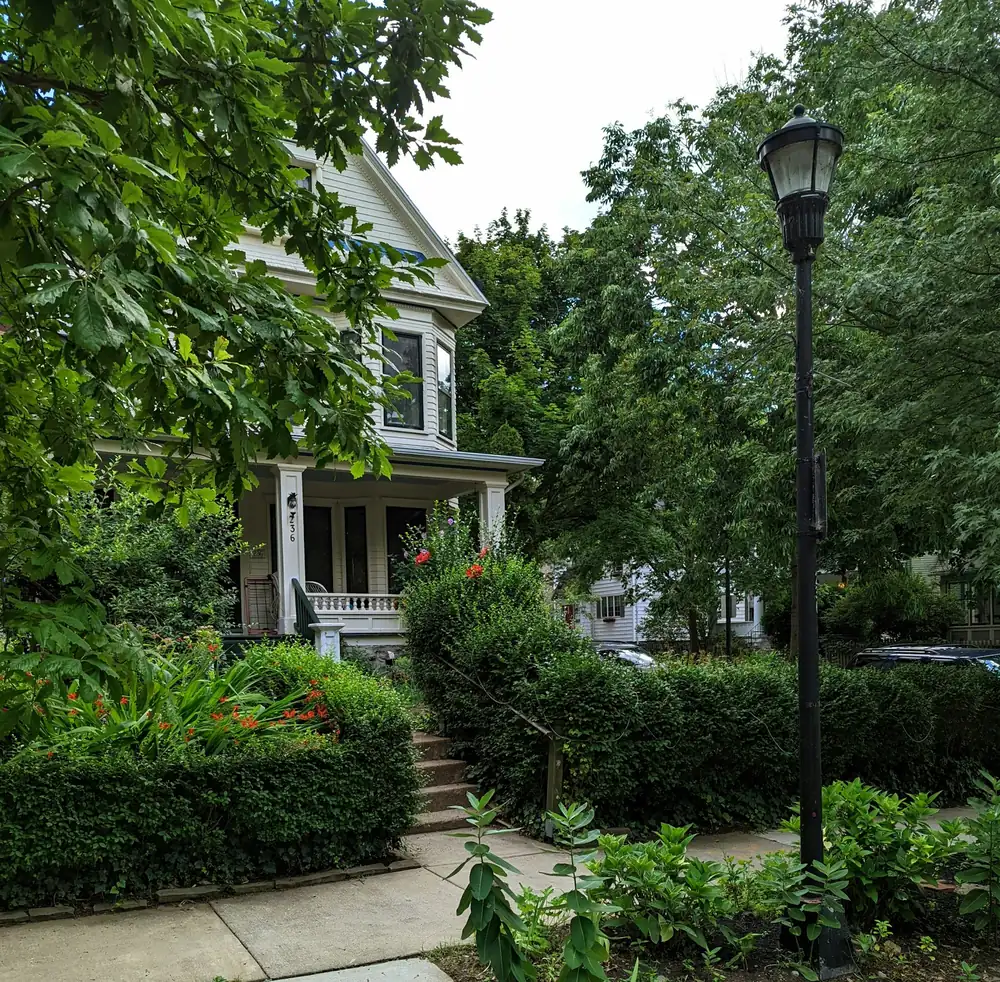
59% of homes in the city of Buffalo were built before 1940, and 34% of the city's housing units are in two-unit buildings (Census ACS 2020-2024). Across the 35 ZIP codes we cover, 31% of 382,691 homes predate 1940. Plenty of those houses were built with hot water or steam radiators and never had ducts. Others had a gravity furnace with big ducts that a modern blower doesn't suit.
Option 1: small-duct high-velocity
A compact air handler, usually in the attic or basement, pushes air at high speed through flexible ducts about two inches across. Those can be fished through closets and wall cavities with far less demolition than standard ducts. Each room gets a small round outlet in the ceiling or floor. The system moves less air per outlet, so it often needs more outlets per room, and it makes a soft rushing sound some people notice.
Option 2: ductless heads
One or more wall-mounted heads per floor, each with its own controls. No ducts at all, and usually the least disruption inside. You give up some wall space and look at the heads every day. Ductless mini splits.
Option 3: attic air handler with standard ducts
If there is a usable attic, an air handler up there can feed ceiling vents on the second floor, and sometimes a few runs down through closets to the first floor. Heat rises, so cooling from the top works well. Attic ducts need to be sealed and insulated, or much of the cooling is lost before it reaches a room.
Questions to ask on the walk-through
- Where will the air handler or outdoor unit go, and how will the lines get there?
- How many outlets or heads per room, and why?
- What has to be opened up, and who patches the plaster?
- Is the electrical service big enough, or does the job need panel work?
- Is this a heat pump? If so, does it qualify for NYS Clean Heat incentives through a participating contractor?
- What permits does the job need, and who pulls them?
Get at least two approaches priced. The lowest quote up front is not always the lowest total once the patching and electrical work are counted.
Lead paint
In a house built before 1978, any work that disturbs painted plaster or trim can stir up lead dust. Firms doing that work for pay in pre-1978 homes are required to be EPA lead-safe certified. Ask about it if walls or ceilings will be opened.
What people around Buffalo want to know
Can you install central air in a house with radiators?
Yes. The usual options are ductless mini splits, a small-duct high-velocity system with flexible ducts fished through walls and closets, or an attic air handler with standard ducts feeding the top floor.
What is a high-velocity air conditioning system?
A system that pushes cooled air at high speed through small flexible ducts, about two inches across, so they fit in walls and closets of older houses. Each room gets small round outlets instead of large registers.
Is ductless or high-velocity better for an old house?
Neither is better in every house. Ductless means less demolition but visible heads on the walls. High-velocity hides the equipment but takes more work to install. Get both priced for your house.
Where these facts come from
- US Census Bureau: American Community Survey 2020-2024 5-year estimates via Census Reporter (tables B01003, B25003, B25024, B25034, B25035, B25040, B25077)
- Fixr: Cost to Install a Ductless Air Conditioner (updated January 31, 2025)
- Fixr: Cost to Install Central Air (updated August 29, 2025)
- US EPA: Lead Renovation, Repair and Painting Program